There are cities that demand a rigid plan, anchored by monuments and sweeping plazas. Hong Kong is not one of them.
Here, the city reveals itself not through grand vistas, but through proximity. The closer you are to the pavement, the more you notice the quiet mechanics of the metropolis: the way morning light hits old, tiled staircases, the scent of roasted chestnuts slipping through narrow, steep streets, the hustle and bustle of the city waking up. The best way to understand this density is to practice slow travel. Hong Kong is a place you must walk—deliberately, and without a checklist.
If you are looking for things to do in Hong Kong on foot, the answer is rarely found on a main artery. It is found in the transition between neighborhoods.
Morning: The Slow Wake of Sai Ying Pun
Start early, where the topography of the island demands your attention. Sai Ying Pun wakes gently. Rusted metal shutters roll upward in a chorus of clatters. Delivery carts navigate the incline of High Street, while elderly residents practice tai chi in the quiet concrete parks tucked neatly between towering apartment blocks.
To begin a proper Hong Kong local itinerary, the key is to avoid the commercial rush. You definitely want to sit down for a brew in a niche shop rather than just grabbing a quick, iced latte from a chain cafe on your way to the MTR. The independent Sai Ying Pun cafes act as neighborhood living rooms. Step into ztoryhome on Queen’s Road West. Make your way up to the first floor, surrounded by warm timber and curated local illustrations, and simply look down at the tram lines humming below. It feels less like a café and more like an invitation into a local’s private study. When you walk without urgency, the city softens.
Late Morning: Textures of Sheung Wan
The transition from Sai Ying Pun to Sheung Wan is almost imperceptible. The shops narrow. Side streets compress. Traditional dried seafood stores sit shoulder-to-shoulder with linen vendors displaying bolts of fabric in sun-faded tones.
Any comprehensive Sheung Wan guide will point you toward Hollywood Road, which curves gently upward. But the true architectural intimacy of this Hong Kong neighbourhood guide lives in the smaller lanes like Tai Ping Shan Street and Upper Lascar Row. Here, you’ll find, local boutiques, tucked away gems and cafes like Halfway Coffee . Sitting outside this vintage-leaning espresso bar is a sensory masterclass. You sip a meticulously pulled flat white served in a nostalgic, floral-patterned Chinese porcelain teacup. The clinking of chipped ceramic mixes with the sound of canvas awnings flapping over the famous antique stalls nearby. It is easily one of the best areas to walk in Hong Kong, where you can spend an hour doing nothing more than standing still, letting the humidity and history wash over you.
Afternoon: Central, Indirectly
By midday, you must navigate Central, but do so indirectly. The financial district can be overwhelming with its mirrored façades and the constant, urgent movement of suits. Instead, walk behind it.
Find the narrow, shadowed staircases that connect office blocks to quieter, residential streets. As you climb the steep incline of Aberdeen Street near PMQ, the humidity peaks. This is the moment to seek a physical and atmospheric pause. Tucked away on this slope is Moonary Coffee — a sleek, stainless-steel retreat. Stepping out of the intense, raw heat of the street and into its cool, dark, highly structured interior provides an immediate sensory recalibration.
From here, explore the Central–Mid-Levels escalator not as transport, but as a viewing platform. Watch the layers of the city stack upon each other: raw concrete, laundry lines, and cantilevered balconies. You begin to see the city not as chaotic density, but as textured rhythm.
Evening: The Ferry and the Night Market
As the air finally cools, trace your way down toward the water. The Star Ferry crossing is not a tourist attraction so much as a mandatory mode of transport. A few minutes across the water recalibrates your perspective. The skyline appears imposing from a distance, but from the wooden benches of the ferry deck, it feels almost human. Light flickers in distant windows. The wind interrupts your thoughts. No photograph quite captures the scale, and that is part of its enduring appeal.
End your Hong Kong walking route in a neighborhood that feels deeply lived-in. Take the MTR to Sham Shui Po—a district defined by its fabric markets, glowing neon signs, and late-night eateries where plastic stools spill onto the pavement. Sit down and order something simple and unfamiliar. The city does not need to impress you with white tablecloths; it simply needs you to notice it.
Carrying Light
Walking a city with this kind of elevation and humidity teaches strict restraint. You quickly understand what you actually need on your person, and what can remain behind in your hotel room. A small notebook. A camera. A light layer for the abrupt shift between heavy street heat and freezing air-conditioning.
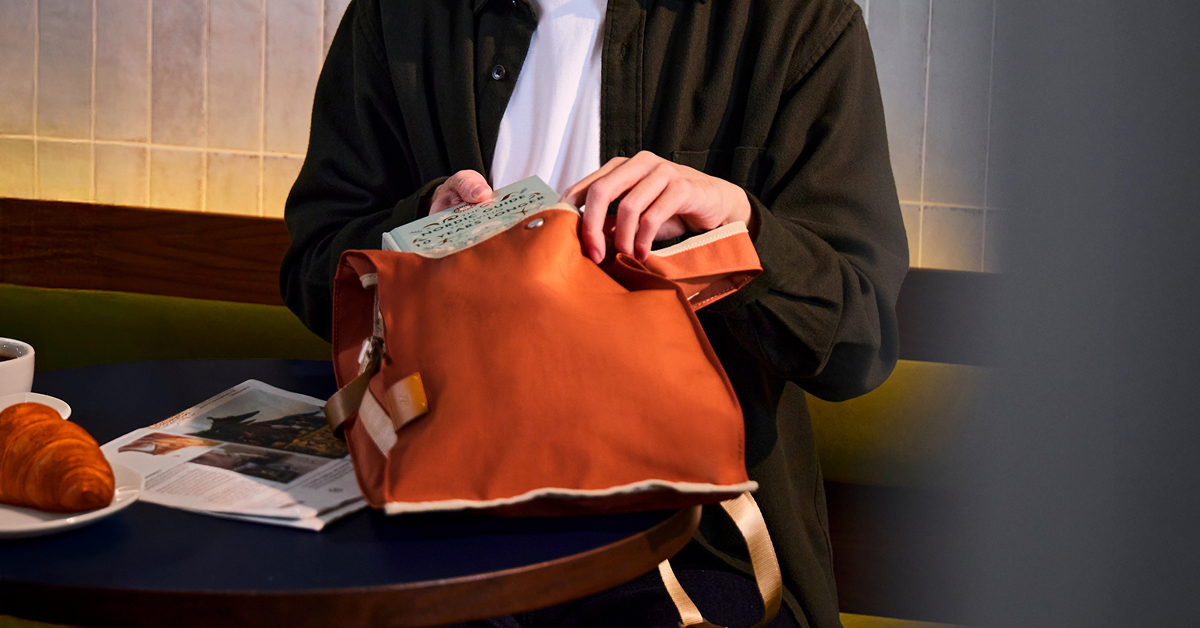
Hong Kong rewards those who move lightly. Movement, in this context, is not athletic; it is attentive. There’s something about walking around a city with only what you need. Light. Uncomplicated. When you rely on a minimalist system—like the soft, adaptive forms found in the Niru collection — you remove the physical friction of travel. It creates mental space for observation.
And Hong Kong, more than most cities in the world, repays the observant traveler.